I am currently offering psychology tuition for any education level. Register your interest here (no obligations!)
I recently started a Patreon community where I offer exclusive content and tailored advice for members and my fans! I would love to have you with us. Click here to join!
Considering Psychology as a degree, but can’t decide between NTU and NUS Psychology? We’ve got you covered! With 4 friends from NTU and NUS Psychology, we answer 10 frequently asked questions about the experience as a psychology student in both institutions. We also provide the nitty-gritty details, and offer some tips on how to thrive if you do choose to pursue Psychology in either university!
copped from @nus_memes
Questions to be answered (Ctrl-F to jump to the question straight, e.g. “Q3”)
Q1. Did you choose NTU/NUS Psych, and why?
Q2. What were your expectations for the Psych course when you first entered? How has the actual experience been similar and different?
Q3. What is the process for getting modules in NTU/NUS Psych like, and how has the experience been for you?
Q4. What are your favourite modules so far, and what modules have you not taken but want to?
Q5. (Because NUS allows seeing grades before S/U) How has the S/U function helped you? For NTU students, what are your opinions on this?
Q6. Share one favourite memory you made in university.
Q7. If you could give your younger self one piece of advice before entering university, what would it be?
Q8. What research opportunities are available for students in your batch, and have you taken up any of them? How was the experience like?
Q9. What career opportunities have you been exposed to?
Q10. What resources do you recommend for incoming students to your university’s Psych programme?
Profiles of our guest interviewees(names tagged to social media profiles)
Gwyneth (NTU):Year 4 doing Psychology and Sociology as a 2nd Major at NTU. Spends all her free time blogging or reading specific genres of manga (yes very boring). PLEASE support her by sharing this post/blog with ALL your friends. Find her @gwynethtyt everywhere.
Tarif (NTU): Year 2 NTU Psychology Major, pursuing a minor in Youth Work and Guidance. In his free time, Tarif enjoys taking long walks amidst nature and scrolling through TikTok and Facebook for funny content. A pragmatic idealist, Tarif can often be caught contemplating life, seeking greater meaning in the work that he does. Beyond his musings, he lives by the phrase: all is well!
Terance (NUS): Year 2 NUS Psychology undergraduate. Doesn’t like balloons.
Ye Rui (NUS): Year 2 NUS Psychology undergraduate. Enjoys watching shows, gaming, and playing soccer. HATES cucumbers.
All links open in new tabs. Select page 2 below to begin.
If my posts helped you and you’d like to show your appreciation, consider making a donation here! It keeps my blog running and my energies focused on writing LOL. I’ll also set aside 10% of all donations received for my monthly subscription to Share The Meal. More details here.
I have a sacred duty to share this song with as many people as I can. The moment the opening chords hit, I was compelled by an external force to drop everything I was doing and simply close my eyes and feel my existence channeled via every note of this melody. I have NO doubt that it was a spiritual experience (the last time I felt this way was watching John Mayer live). Good night and may we all find our good places within ourselves through this song.
I read The Art of Thinking Clearly by Rolf Dobelli a while back. It already is a summarised version of 99 common thinking errors, but I took it upon myself to simplify it even further. So here we are. I haven’t completed it, though, so we’re only up to 30 for now.
Survivorship bias: success cases are over-represented, leading us to overestimate our chances of success
Swimmer’s body illusion: selection factors are confused with results
Clustering illusion: tendency to perceive patterns where there are none
Social proof: predisposition to follow others’ behaviours, esp. in uncertain situations. Combat with being skeptical and challenging norms
Sunk cost fallacy: reluctance to abandon an undertaking due to incurred costs, though that has no relevance to future outcomes (irrational). Consider only the latter
Reciprocity bias: social predisposition to respond to actions in a similar manner (e.g. kind behaviour is returned, so is hostility)
Confirmation bias: we disproportionately focus on evidence that confirms prior beliefs and disregard contradicting information. Seek out disconfirming evidence and clarify milestones to ensure we do not overlook failures.
Authority bias: information with authority is perceived as more credible/influential
Contrast effect: the effect of an object is enhanced/diminished when perceived in relation to another, though it should have no bearing (beware discounts, cheap add-ons, beauty standards).
Availability heuristic: evaluation of a concept is determined by how readily examples come to mind, which distorts actual risks and decisions made. Make effort to consider relevant but less accessible information, e.g. alternative views.
Narrative bias: illusion of causality; tendency to connect disjointed, random occurrences into a cohesive, controlled narrative (stories). Consider omitted elements (via negativa) and be wary if the bias encourages risky decisions.
Hindsight bias: hindsight is 20/20; we modify our cognitions after an event such that the event seemed inevitable and logical, although we are poor forecasters in reality
Overconfidence effect: person’s subjective confidence in his/her judgements is reliably greater than objective accuracy of those judgements – even pessimists.
Chaffeur knowledge: vs. real knowledge – people who have invested time and energy to genuinely understand a topic. Chaffeurs merely repeat it without real understanding. Know your circle of competence and recognise when you fall outside.
Illusion of control: tendency for people to overestimate their ability to control events
Incentive super-response tendency: people respond to incentives by changing their behaviour (e.g. if you pay per hour, people prolong their work). Reward both intent and result, and watch out for ways people may exploit the system.
Regression to mean: the natural tendency for phenomena to even out towards the average. If an extreme event happens, it is likely to return to the average in time (think normal distribution).
Outcome bias: tendency to evaluate a decision based on its outcome (good/bad) rather than the decision-making process. This is an error because no decision-maker in the past ever knows for sure how the risk will turn out. To avoid the influence of outcome bias, one should evaluate a decision by ignoring information collected after the fact and instead focus on the quality of the factors at play.
Paradox of choice: more choices decreases quality of decision-making, and leads to lower satisfaction. Set a list of criteria and stick to them; recognise that perfection is unattainable; and learn to love what you choose.
Liking bias: the more we like someone, the more likely we are to trust and help that person. Influenced by 1) attractiveness, 2) similarity to us, and 3) they like us too. To maximise this benefit: send people compliments and make them think you like them.
Endowment effect: people’s willingness to pay for a new object is typically lower than the amount they are willing to accept to give up the object. e.g. people lowball for textbooks on Carousell but sell it at high prices. Related to loss aversion. Related to mere ownership effect – owning an item makes one evaluate it more positively. Endowment effect applies even to near-ownership circumstances. Don’t cling to things and consider whether the relationship you have to those items really matter.
Groupthink: phenomenon where desire for harmony in an ingroup leads to dysfunctional decision-making processes and irrationality. Symptoms include: illusion of invulnerability, illusion of unanimity, pressures toward conformity.Question tacit assumptions and always appoint a devil’s advocate to break consensus.
Neglect of probability: we respond well to the magnitude of an event, but lack intuitive grasp of its likelihood (probability). Zero-risk bias: we prefer 0% risk even when the alternative may have better outcomes. When faced with emotional topics or serious threats, we respond more poorly to risk reduction stats.
Scarcity error: tendency to place higher value on an object that is scarce and lower value on those that are in abundance. The more difficult an item is to acquire, the more value that item is perceived to be. Arises from social proof and commitment. Reactance: when we are deprived of an object, we deem it more attractive. To counteract, assess products solely based on their qualities. And remember that most things will come back – like sales.
Base-rate neglect: when people are given generic information (e.g. statistics) and then specific information (e.g. anecdotes), the mind tends to focus on the latter. Disregard of fundamental distribution levels. Specificvariant of extension neglect – cognitive bias whereby people ignore size of the set during an evaluation in which the size of the set is logically relevant, e.g. ignoring sample size and variability.Watch out for anecdotal information.
Gamblers’ fallacy: the erroneous belief that if a particular event happens more often than normal in the past, it will “balance out” by occurring less in the future. This is problematic if the events are statistically independent, e.g. a dice roll. What happened in the past is unrelated to the future.
Anchoring bias: cognitive bias whereby an individual relies too heavily on an initial piece of information offered (the “anchor”) to make subsequent judgements. Once this initial value is considered, subsequent negotiations and decisions will align towards it while dissimilar values are discarded. The more uncertain the value of something, the more susceptible people are to anchors. Use anchors to elevate your value, but also be wary of them when it comes to sales.
Induction problem: inductive thinking is the tendency to draw universal generalisations from specific observations. However, these generalised certainties are always provisional – think Black Swan event.
Loss aversion (Daniel Kahneman): people fear loss much more than they value gain, and are much more motivated to avoid loss even when this comes at the expense of potential gain. Exploit this when advertising by appealing to how a product may help you avoid losses/disadvantages.
Social loafing: the tendency for individual effort to depreciate when in a team setting. Groups’ total productivity is less than the sum of its individual members working separately. Increases proportionally with group size, due to diffusion of accountability and deindividuation. Combat this by making individual contributions visible (measurement), and motivation. Related to risky shift.
fell in love with ideas of you roll up then we look at the view hold up, do you think of me too? nowadays I don’t know what to do why you go when I needed you close back then I messed it up, yea I know without you is when I go through the most but it’s okay when I got you close
Just around this time in 2018 I was eagerly awaiting Union Day. For many of us, it’s an otherwise ordinary day with a minor perk: classes, by law, are not allowed to be conducted between 10:30am-2:30pm. For me it was a day of reckoning, where my fate as a “student leader” lay in the hands of my peers. In the month leading up to the big day, I had applied for the role of Union Representative (now “Union Executive Committee Representative”) in SSS Club, and had my plans all laid out for a corresponding role in the NTUSU Exco as Corporate Communications Executive (Relations). On Union Day, undergraduates are empowered with the ability to vote and elect a handful of representatives to their school Club, as well as the Big 3 (CAC, SC, WSC). And I was one of those hopeful applicants, filled with dreams and grand visions of a building a better place for students.
Fast forward two years and here I am – no longer a student leader of NTU, but a student who can say she’s had the experience of being one. Still, I remain invested in the election affair every year not only because it is an event of personal significance, but also that many of my friends have opted to contest for various positions in the clubs/societies they identify with. But enough about me – this piece wasn’t written for me, but for NTU students.
I aim to answer two questions, broadly:
What is the significance of the student leader?
More importantly: why should you care?
I will juxtapose two perspectives: as a leader from my experience in my junior years, and as an observer watching from the crowd following “retirement”.
The contested role of the “student leader”
What do you think about when you hear the phrase “student leader”? Responses range from the apathetic/nonchalant to mild approval to aggressive frustration. The last one is typically the most salient, perhaps because of the negativity bias. (In other words, we are more likely to recall unfavourable information, and we are tea-loving drama hoes).
There is a murkiness that surrounds the exact responsibilities of student leaders, though I will endeavour to state that this is largely deliberate – this is so that leaders can absorb a range of functions without being unnecessarily restricted. But while its abstract nature offers freedom, it also means little guidance and the leader is left to concretise it themselves. In my role as CCE(R), my overarching aim was to “bridge the gap between students and administration”. That could be anything. I opted to build U-Insight and U-Feedback, since they were the main channels of communication. But if there is not enough key initiatives or functions achieved that distinguish the role, then it is easy for onlookers to claim that the leader is not doing enough, or even that the role is redundant. They’re not necessarily wrong.
I’ve observed a disjuncture between the perceptions of students “on the ground” vs. student leaders on the issue of what they actually do. As a leader, it’s easy to list out all the things that I did – craft and disseminate timely information, manage social media channels, provide copywriting for all publicity materials, respond to students’ concerns… the list goes on. On the other hand, ask any cynic what they think student leaders do and you might get a diametrically opposed view.
this is not uncommon to see. it is not exclusive to the SU.
A compilation of some strong criticisms of the so-called student leader. I address all below:
Selfish; only out for ourselves and our resumes, without real intention to benefit the student community.
The image of the porcelain doll is apt here: filled with an air of unwarranted self-importance, yet not serving any real purpose other than to look pretty.
Limited in power, yet corrupted by power. (Make up your mind!)
I personally believe there is a positive correlation between individuals driven by power/achievement and the likelihood of taking up leadership positions. But this does not necessarily mean they will be selfish. The ability to make a change is imbued with power, yet this proposition attracts different kinds of people. Some are motivated by a real desire to do good, and I also know of others whose ego is wildly out of proportion to their capability. It is unfair to make broad generalisations of the entire character of a group based on a few eye-catching examples. The best way to know is to judge for yourself, and this is not via hearsay. It is about hearing from the candidates themselves. I elaborate on this later.
Another common accusation is that clubs and societies are merely extensions of the administration/upper management. Here is where I recall an article I read in a module on organisational structure (HS2005) by Kanter (1994). It addresses issues of power. I took it the same semester I was in the Students’ Union, and thus found it particularly relevant. Kanter proposes that there are three sources of power in any organisation, and I attempt to contextualise them here.
First is lines of supply – the more capacity a leader has to bring in new resources such as money and materials, the more powerful. It is important to establish here that virtually all events are funded by the school/SAO. Thus, proposals by student organisations are subject to multiple layers of approval and careful consideration of costs and benefits. This means that bargaining power is relatively limited, especially if it is not in line with the consensus from management.
Next we have lines of information – knowing current affairs and relevant news. The club has a bit more power here if they can manage to conduct surveys that assess members’ opinions, which they can then use to strengthen their claims to the administration. However, due to the inherently hierarchal structure of the system, information on school policies is often ambiguous or not conveyed to student leaders altogether. The opacity of the decision-making process at the highest levels of NTU is common knowledge – only when decisions have been confirmed are they announced to students. While there is an effort to include representatives in this process, this is not always a guaranteed. Furthermore, the rapidly-changing nature of key events such as Covid-19 means that things are constantly in flux. When students write in asking for certainty in uncertain situations, there are a very limited range of responses student leaders can pursue. It takes time to clarify.
Last we have lines of support – the power to call for extraordinary, innovative, but risky events without having to worry about resistance. This is arguably the most complicated. A bureaucratic structure is naturally predisposed – by design – to maintain the status quo as far as possible. The life cycle of any ambitious uprising against the current order is like that of a bug’s – short and usually quashed before it can grow into anything bigger. Irreversible upheavals are anathema to the existing order. Even at the policymaking level, many initiatives may be delayed with the rationale that “more research is required to avoid unforeseen consequences”. And that is rational to say considering any change has implications on up to 24,000 undergraduates at an institutional level. But that is not to say extraordinary things can’t be achieved. I don’t believe that the history of NTU has ever seen a fully S/U-able semester until last year. And that was achieved because students were able to collectively galvanise their interests, providing the sufficient momentum for student clubs to campaign for changes. However, it comes with great difficulty, and you need the right time, place, and people.
Agency
One note to make is that our system of (school) governance is not universally applicable to other cultures. When I was in McGill University I saw critical reports on existing practices all the time. But that’s not how it works here. It seems like a very cop-out answer but I believe it is best understood within the broader climate of Singapore’s political ideology.
Student leaders, by virtue of their position, are agents created to perpetuate the existing order. This is not their fault. They still do their best with the resources and constraints they have. There is a lot going on behind the scenes that members sometimes take for granted. Those “welfare pack” events every year that some mockingly disparage even as the same people readily join the thousand-strong queue for them? They take months of planning and logistics. Not to mention that there are tons of other activities occurring across the year. And even event-running is pivotal to maintaining school culture. We take student activities for granted until they disappear.
Leaders as just “overhyped event planners”? I recall the time my colleague showing me a 50-page document reviewing a school policy based on a large-scale survey that he had teamed up with another colleague to implement (hi A if you’re reading this, pat on the back for you). I would have disseminated it but got shot down before I could. His partner (also A, love y’all fairies) worked himself half to death over policies relating to student life, personally tailoring thoughtful 300-word responses to students who were flagging issues they faced. He finally saw his ideas come to success after months of back and forth, but was it worth it? Either way, I know he did his best.
The student not immersed in this reality only has a partial view into what leaders actually do – but that’s not their fault. The student-member doesn’t see what’s going on, because they don’t have access to this privileged information. I argue that this is due to the limitations on the part of clubs (and perhaps by default the system as whole) in measures to ensure accountability and transparency.
Accountability and transparency
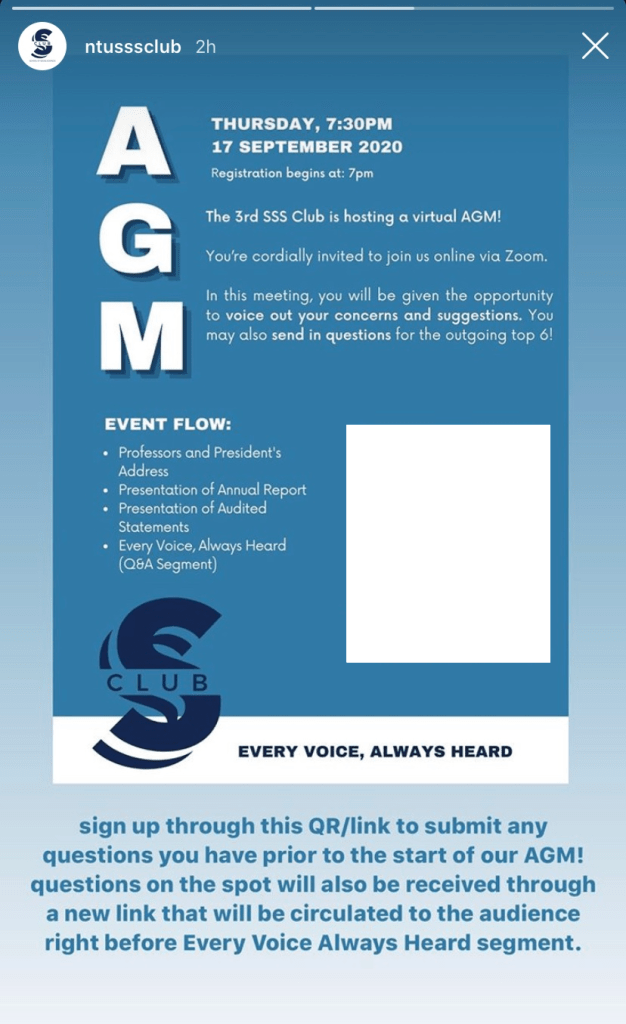
I had the pleasure of attending the SSS Union Rally last Friday via Zoom. I noted a discrepancy in the recruitment emails and final rally line-up sent earlier that week by the club, and thus I sought to clarify the matter as a Concerned and Invested Member. Unfortunately, I picked an inappropriate time to do so, during the transition between two candidates — the Returning Officer appeared visibly thrown off by my question. Seemingly offended by my indiscretion, he first spluttered that I should have “done my research beforehand based on the information available” (but I did, or I wouldn’t have a question to ask in the first place…). He then proceeded to inform me chidingly that it was rude and unbecoming to unmute and show my face in a rally(!) without seeking permission to do so.
Throughout this lecture, he did not answer my question nor seek to clarify what I meant. He did say it could be asked at the end of the rally “when the questions are open to the floor”, but I left because I have better things to do than sit in for another three hours. Still, don’t take my word for it – verify it with the recording of the rally! If they make it publicly accessible, that is. (Maybe if a Student Advisor was present, there might have been a better outcome to this? Hahaha!) Of course, there are many potential innocuous explanations for the discrepancy. The club is welcome to respond to my question and I will revise my account where necessary.
every voice, always heard.
Every year leaders face the same problems and ask the same questions — how do we increase student engagement, and actually make changes that benefit the members’ welfare. These are questions with no answers and no end: we can only inch forward slowly in trying to discover what works and what doesn’t. One way to start is to increase transparency and accountability of all processes, and not ignore students’ concerns. If the students know what is going on then they can be invested in it. But this is, of course, not as easy as it sounds.
Before Covid-19 happened, there would be a period of time where applicants’ details were publicly displayed at the foyer for students to peruse. Inconsistencies, if found, could be raised to the election committee, and disqualifications could ensue if they were found to be legitimate. For example, I believe there is a rule whereby you cannot have a fellow candidate endorse you (you need a supporter and seconder for your application). Maybe in the transition online, this process was omitted. I didn’t know who my representatives were until two nights before the rally.
I have good faith that the student leaders did their best for SSS Club during their term. They organised a few events, e.g. a welfare-themed one. In response to students’ concerns on the newly implemented S/U option, they provided relevant clarification on questions raised by students. They created a new social media page @sss.academics to address academic concerns. There are a lot of background processes running at any given point, and we should give them credit for what they have achieved.
I believe that the onus is on student clubs to make information about club proceedings and updates easily accessible to their members. That means that relevant documents should be stored in an online location that is retrievable at a click and not hidden in some dusty treasure chest. In my opinion, reports, constitutions, or meeting minutes should be sent without question upon request – and the member shouldn’t even have to ask for it to be privately sent in the first place. It should be a given that it is publicly available. Fun Accountability Test: send an email to any club asking for their constitution and assess the response you get. I will qualify this by saying that clubs often have to strike a fine balance by deciding what is shared and what is not, because you don’t want to risk inundating your members with information to excess and driving them away or detracting from other relevant matters. Presidents should also regularly conduct reviews to ascertain if certain positions are doing too much or too little.
Walkovers
A final phenomenon to tickle your interest is the overwhelming tendency towards walkovers in school elections. This means that only one person is running for one position. But did you know that all roles, as long as you meet the prerequisites, are open for contest? Some societies do engage in deconflicting strategies to maximise student fit but a position doesn’t “close” even if there are no vacancies – nobody is guaranteed a position until they are officially voted in on Union Day / Annual General Meeting. So watch out when you receive a recruitment email where certain positions are omitted. Oftentimes you can still apply for those omitted from the list – and you should raise alarm if you receive a suspicious, deflecting, response. The reservation of roles is not allowed. But nobody is handing you anything on a silver plate – you want it, you should be prepared for it. Anyway, walkovers are the norm, and contests are the exception. This creates a troubling situation sometimes when onlookers perceive leaders as incompetent (but there is no better choice). Yes, if there was a better choice they wouldn’t win… but where are the contestants?
Okay, so what?
The takeaway for students is: if you’re frustrated at the current state of affairs, demand accountability. Make your opinions heard, and stand for constructive change. Even if you think student leaders suck, being one is better than being a sitting duck lamenting that nothing is happening. In case anyone takes my words out of context: I have NEVER once blamed students for any of this. I have made it clear that it is a STRUCTURAL issue. But you have the POWER to change it.
Vote. Know who the people representing you are. Ask questions (at the right time, I guess). Save the receipts. Demand accountability. Attend your AGMs and rallies and ask your questions and find out what events are relevant for you. It’s not as if you have anything to lose. Watch out for leaders who present with an arsenal of lofty, abstract ideals (hot air) but have no concrete plans to back it up. If they say they want to “improve the welfare of students”, ask them what examples of initiatives they have in mind and how they will implement them. Don’t be afraid to vote against people that you feel don’t reflect your ideology or are ill-equipped. Again: your vote counts. It will tomorrow. It always will.
Wow, you’ve made it!
Special section for Psychology students only. Come for AGM tomorrow! (See @ntupsychsoc on Telegram.) I wish to promote my friend Tarif who is running for president in PsychSoc this year. He is an outstanding student who excels academically and socially. As a former student leader, whatever that means, he has my stamp of utmost confidence. But decide for yourself! Tune in to PsychSoc AGM tomorrow (Tues, 15/9) 6:45pm on Zoom to hear more about his plans and ideas. (He has concrete plans!) And of course, vote – your opinion matters. Note that you need to be registered as a member to attend the event.
Updatefor my tea-loving drama hoes
Woke up this morning to this:
nice new visionlook ma, now i can ask questions on the spot
Coincidence? Whatever it is, remember to vote and question.
I am currently offering psychology tuition for any education level. Register your interest here (no obligations!)
I recently started a Patreon community where I offer exclusive content and tailored advice for members and my fans! I would love to have you with us. Click here to join!
Compilation of useful resources for incoming freshmen.
NTUSU Clubs & Societies Guide: overview of all clubs and societies in NTU, along with social media and contact information. Freshmen Introduction Booklet also at this link
Blackboard: NTULearn but on your mobile. Essential
uWave: used to be under NTUSU but had a dramatic split and then rebranded itself as a “lifestyle app”. Might be worth a shot if it still has the old functionalities e.g. timetable integration
Forest: plant virtual trees; can’t leave app while your tree is growing. Virtual coins earned can be converted to planting real-life trees(?)
BFT: similar to Forest; keeps your phone face-down
GoParkin: NTU’s new barrier-less initiative uses this for parking
CamScanner: scan pages, cards, receipts, your face on demand… You’d be surprised at how much more professional your notes and documents will seem after using this.
Productivity hacks
Eisenhower matrix: is your task important? Is it urgent? Is it both, or neither?
Setting SMART goals: because setting goals is the best way to justify procrastination
Trello: project management tool designed for collaboration – you can now chastise your group mates with evidence of their social loafing!
RescueTime: logs your computer usage to create personalised productivity reports
When2meet.com: coordinates meeting availabilities for groups and presents them in a clean calendar template. No longer do you need to suffer through the never-ending WhatsApp copy-paste threads.
all opinions in this article are my own. pictures are mine unless otherwise stated.
I travelled to Japan to study in Waseda University as part of a language immersion programme under NTU, from 17th June – 26th July 2019. (That was almost a year back because I forgot about this post, but better late than never.) It was the final phase of my transformation into full-fledged weeb. As a model student ready to champion NTU at all times, I hereby report my experiences for my fans.
じゃあ、始めましょう (well, let’s begin)! (Select page 2 below to continue)
What you’ve been dying to see Would you be that flower for me I prefer marigold But its the lily from the valley that you want
Jasmine, marigold, winter soul yeah Whichever blooms first I might call you by that Whatever you’d like Daffodil or tulips cause I really don’t mind If that makes you happy then I’ll be happy too
Girl give it up, give it up, give it up, it’s here Don’t let it hurt, let it hurt, let it hurt, nothing left to fear Winter or spring it don’t matter to me, as long as you’re here I can keep you warm till spring comes (x)
As my fans and haters are well-aware, Gwyneth is a feminist (and the whole world must know). That’s a loaded label that can mean a lot of different things depending on who you are and what you believe. Not everyone can relate to my definition of it, i.e. equality of the sexes. In fact, there exists a notable group of people who sincerely believe that men and women have achieved equality in society (and by extension, that the ladies don’t know their place by asking for more). Evidently, they have never taken a class in sociology, but then again I’ve never taken a class in men’s rights.
Yet because I am equipped with debilitating self-awareness, I recognise that I can’t criticise others for being keyboard warriors without being hypocritical. I’m the liberal here, and liberals are only good for getting triggered :-). So I’ll save you the trouble and call myself out first. The difference between me and the rats out there is that I hope to impart a lesson through this piece, rather than merely inconveniencing others. If I am a keyboard warrior, at least let me be an enlightened one.
baby g in her natural habitat.
Disclaimer before we proceed: this piece is written in opposition to a specific subtype of man. Certainly, it would be unfair to generalise the beliefs and behaviours of a select few to the entire population, so I would like to clarify in advance that I am in no way saying “all men are trash”. If you’re reading this and it hits too close to home, know that I frame your opinions as a manifestation of social evil. That is to say, I may have personal vendettas against you (as you may have with me), but for the purposes of this essay, I am discussing the problem at a group level. For stylistic and venting purposes, I will also be pulling ad hominems – because I can and I want to. To sum up, the entire argument to follow is grounded on three cornerstone assumptions.
Men as a group, vis-à-vis women, occupy a superior position in the existing social hierarchy.
Regardless whether individual males are aware of, or acknowledge this imbalance of power, they are beneficiaries of a structure that systematically privileges them on most grounds.
I understand that the above may be contradictory. If you are confused or simply disagree, feel free to defend yourself by hashtagging #notallmen. It’s the quickest way out and you don’t even have to expend any mental energy. This is also not to say that the lives that males have by virtue of their existence is a path of rainbows and flowers. But overall, they do get away with a lot more. If I had to elaborate further I would require the space of another blog post, but why expend the effort when we have Wikipedia and Google Scholar?
Well then, if you’re still here, let the proselytising begin.
THE LEGACY OF SEXUAL DISEMPOWERMENT
Where do I begin my journey of triggeredness? All it took was a single statement, really. Virgin girls = best girls. But as we will learn, nothing is ever that simple. A single statement can reveal a lot about one’s underlying perspectives and values.
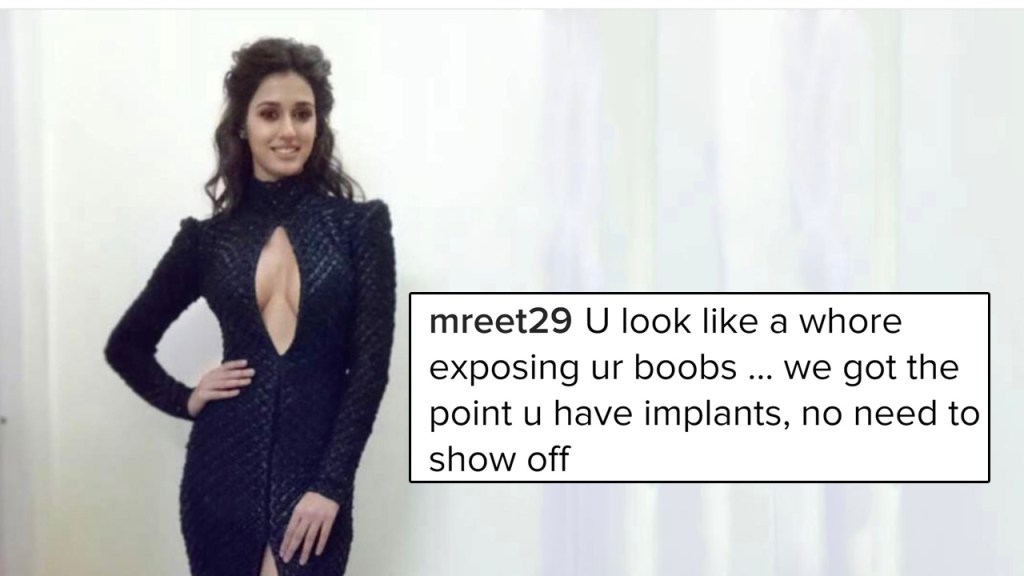
Slut-shaming has existed for eons, though it emerged in popular discourse more recently. In short: it’s the act of denigrating women as long as they are perceived to fall outside acceptable standards of (sexual) behaviour. To simplify my explanations, I will let the pictures do the talking. They range from subtle to blatant. And, sadly, it can be perpetrated by women too.
absolutely. It’s also usually young women who get slut-shamed.
i lost it at penis punching bag
Slut-shaming encompasses a wide range of aspects – anything from dress to the number of sexual partners. Sound familiar?
VIRGIN GIRLS ARE THE BEST
A picture says a thousand words. So do statements, especially when they come with a ton of Bigotry Baggage. Here, together, let us break down what “virgin girls are the best!” really means, irrespective of the identity of the person who advanced it.
Virgins = good.
Non-virgins = not so good.
Let’s spice up the above by assuming that the person is speaking of virginal status before marriage. It flows logically: without it, the speaker would merely be reduced to someone with a fetish for virgins, plus they would be attacking everyone around them who is not a virgin, including their parents. Perfectly valid, except rather strange. Now, the implications rise.
Unmarried virgins = good
Unmarried non-virgins = not so good
Based on the above, losing your virginity before marriage somehow degrades you or makes you less desirable as a female (girl).
Sound familiar?
In the following section, I express my reservations with the above logic, or should I say plainly, slut-shaming mentality. They come in two forms. First, the emotional “effeminate” argument, where I just get mad and yell because women are apparently more emotional creatures. Second, to counteract the previous statement, we have the logical “masculine” argument. But don’t worry – there isn’t much substance in the latter either because, well, there’s not much you can put against irrationality, ha ha.
r/menwritingwomen
The ad hominem, emotional, feminine argument, where I attack the person behind the argument instead of targeting its content because I’m triggered. Think of all this repressed anger as the inevitable culmination of a whole lifetime of misguided individuals attempting to instruct me what I should or should not do with my body.
Some boys (not real men, since we’re playing the game of “constructing arbitrary differences within groups”) really be out there saying bullshit like this before they, in the same breath and without a trace of irony, ask me why I detest the male enterprise. For the benefit of all then, I have to explicate my distaste by overtly referencing dumb quotes that I can’t believe I’ve heard sometimes.
What’s worse than a chauvinist? A chauvinist who acts as if he is a proponent of gender equality, while acting to limit the freedoms of women. Kudos for creating an artificial distinction between women on the basis of their private affairs that has nothing to do with you in the first place. You’re not the one sticking your dick into them anyway, so why is it any of your business? But then again, it’s not as if we haven’t had centuries of experience of men sticking their noses (and dicks) into places where they don’t belong (see: abortion), because ~women are weaklings that need to be protected by their morally and intellectually superior counterparts~.
It’s okay, you can simply write me off as a dumb female going on a rant about imaginary oppression that doesn’t even exist. There’s so many other more meaningful things that one can focus on – like sieving out the virgin females to chase. Not that you’re getting any either way.
Thelogical, rational, masculine argument, where I attempt to present a coherent argument against this virginal rubbish, though I shouldn’t have to because any decent person who respects others would realise that this line of reasoning is problematic in the first place. Whoops, ad hominem!
I decided to rephrase my argument in a way that appears logical, since well, ladies are too emotional and need to be more rational. Side-track: yes, I was informed by a kind man recently that inherent biological differences between men and women mean that the latter are predisposed to be more emotional creatures. Of course I had to deconstruct his argument thoroughly by repeatedly asking questions to clarify, because no smart man, virgin or not, will explicitly acknowledge that he actually holds such beliefs without some prodding. Because of how broad this statement is, let’s delve in a little deeper to investigate: what emotions are we talking about? To what extent do they differ, and why do they differ? Consider the following from a psychological study on gender differences in emotion. The frequency and intensity of emotions experienced by men and women from two samples (Australian/International) was measured. Effect size refers to the “practical magnitude” of the phenomenon in question.
[In the Australian group], there are significant gender differences for the frequency of Affection, Joy, Pride, Fear, Anger, and Sadness. The effect sizes for Affection, Fear and Sadness are small, and those for Joy, Pride and Anger are extremely small. In terms of intensity, significant differences are only found for Affection, Pride, and Sadness. The effect sizes for Affection and Pride are extremely small, and that for Sadness is a small effect. The means for Pride are in the opposite direction from the other positive emotions with males scoring higher than females.
In the international group, there are gender differences for the frequency of Affection, Joy, Contentment, Fear, Anger and Sadness, with females scoring higher in all cases. The effect size for Anger is extremely small and none of the others is more than small with 0.30 for Affection being the largest. The results for intensity in the international group differ from the Australian. Significant gender differences, with females scoring higher, are found for all emotions except Pride. Apart from the extremely small effect for Guilt, the other effect sizes fall within the range of small effects.
From these results it is apparent that there are significant gender differences in the reported frequency and intensity of some emotions, particularly in the international group. But the differences are uniformly small or extremely small. Any stereotyping of females as more emotional than males for these emotions is, therefore, based on small differences between the genders. […] This interpretation lends support to views like Brody’s (1997) that the perception of gender differences in emotional expression are exaggerated by stereotyping, and are acquired during the process of socialization rather than being physiological or neurophysiological or genetic in nature,Buss (1999).
(You know, some research has found that men tend to be angrier than women. But you can probably tell from this post alone that I am chronically angry too. LOOOOL.)
With that addressed, let us revert to the point. On what basis is a virgin “better”? We’ll leave the scripture part out of this, because otherwise there would be no need for a “rational” segment of this piece. Actually, that doesn’t leave much to address, but I’ll do my best.
THE PERILS OF MARRIAGE
Why is marriage in particular so revered as a milestone? Sure, it is a rite of passage signifying commitment and usually stands as a celebration of love. But does being unmarried dilute the love that two people (or more, if you like) share? Radical concept in our society for now, perhaps, but there is a rising trend of unmarried parents in the world today. These people possess all the characteristics that a married couple would have – cohabitation, children, long-term commitment – everything sans the legal binding. Are they less “good”, just because theydecided to have pre-marital sex?
And not even marriage is a guaranteed. There were 7,344 divorces and annulments in 2018. What if two people (both abstinent prior to marriage) wed and then have spectacular coitus, but decide to divorce later on? Since they are now technically single but no longer virgins, what category do they fall under? Are they inferior beings until they remarry? Surely it is apparent by now that determining the worth of a person via such arbitrary standards makes for sticky situations.
This is merely a conjecture on my part, but it almost seems as if the desirability of a virgin to the believers of premarital-virgin supremacy lies in the [female] virgin’s propensity to be deflowered. So that you belong solely to the one who marks you, as if you’re territory to be conquered by dick. The pinnacle of objectification. Sorry but that only works in young adult erotica, which is the furthest thing removed from reality possible. (People in there neither need lubricant nor have refractory periods at all. But I’m getting ahead of myself.)
Lastly, if you’re having sex only for the purpose of procreation, I can only say I feel sorry for you. Not a valid argument, but really. Really.
CRITICAL COMMENTARY: IT’S YOUR CHOICE
I have no qualms against virgins, male or female. Prude-shaming is as toxic as slut-shaming. It is fair game if one has a sexual preference for virgins or non-virgins. That’s fine. That’s like having a preference for males or females, or even neither. Or like, BDSM play (shame me more, daddy!). What is not fine is attempting to impose your standards on others regarding what is considered good, bad, pure, impure, right, and wrong on matters relating to their bodies. The issue is compounded when it disadvantages certain groups over others.
It makes me most sad when I see women themselves slut-shame each other, or subscribe to these outdated ideologies. Imagine learning to hate your natural propensity for pleasure – very much a part of you, and your body – because you were told that your desirability as a person somehow stems from suppressing your sexuality.
damn liberals be coRRuptiNg thE sOciAL orDeR
My main goal of writing this piece was, surprisingly, not to let my anti-feminist counterparts know how misguided they are (still, if the shoe fits, you are welcome to wear it). Change comes from within, rather than outside. This was targeted at my readers who are ambivalent about this issue or who find themselves taking a middle-ground on such matters. Slut-shaming hurts both men and women. It is a tool of control. Remember that the next time you’re reading an article and find yourself exacting certain standards that may not be fair to all parties involved. Remember that when you hear your friends making a demeaning comment disparaging someone because they “stepped out of line” on some arbitrary standard of sexual behaviour. If they want to have sex with 30 people because they can, and it doesn’t hurt anyone, you don’t have any right to lecture them. You’re not superior because you didn’t have sex or had less.
Consider this a declaration of intent. Every time someone says something dumb like “virgin girls are the best”, I’m going to call it out for its bullshit. The era of sexism, well-intentioned or malicious, is passé. Talk shit and get hit. You’re going to learn that your words and actions have consequences even if you like to coop yourself up in your little bubble. You can say it again; I will simply call you out for it once more. The age of laughing it off as a joke, or as the oversensitivity of a fragile woman, is long over. If you suddenly feel prosecuted because you have a penis, perhaps you will finally understand how it feels like be someone with a vagina who is constantly told that they should feel guilty for embracing the basic instinct that is sex, original sin or not. If my ladies want to keep their virginity until marriage, fine. I cannot stop them from celebrating orthodoxy when it comes to matters of their own body (although neither should they be allowed to infringe on the rights of other women). But god forbid it be men who get to do so.
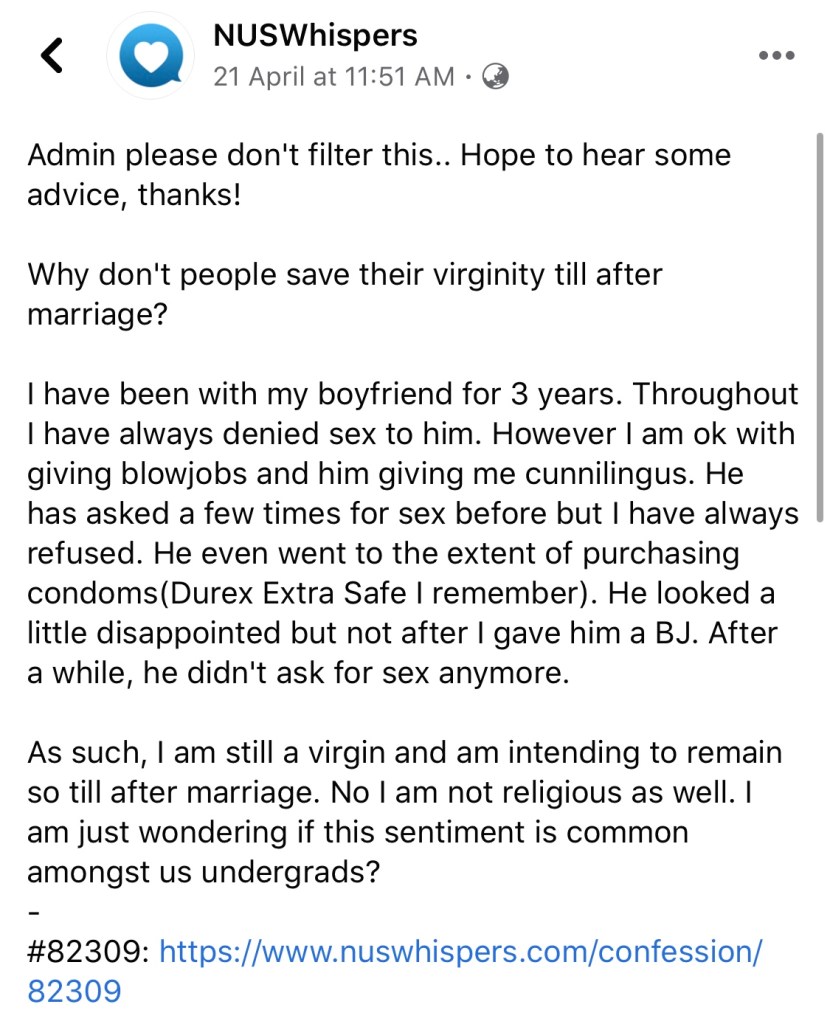
The good news is that with the passing of time the younger generation (our age) is starting to become more comfortable with their sexuality, even in our socially conservative climate. (But don’t take my word for it – I use markedly biased samples such as NTU Confessions and NUS Whispers LOL). Sometimes I see posts that imply people are stressed over their virginal status instead. Hopefully this is a sign that certain regressive mindsets are slowly being swept away. Either way, let’s continue work hard at making the social world a better place for all. And do yourself a favour: after this circuit-breaker, go out and indulge in the sex that you deserve. Unless you don’t want to.










 baby g’s diary