Another interesting thing is that a few similar questions were posted prior. All of them were fixated on women as the subject.
The answer distribution was interesting. It suggests that women do not give themselves completely to men until the latter have “proven their worth”, so to speak.
It made me wonder about my own answer. This post is my process of working it out.
Everyone deserves love — or so a humanistic therapist would say — although not everyone eventually deserves your love.
Not because reciprocity is expected, but because we have a finite capacity and must optimise where it goes. We must make calculated decisions about who we want to love and who we want to love more.
I wanted to believe I could love everyone the same, but I’m only human.
I was obsessed with you. I could beg you to pay attention to me and love me. But what for? I am chasing a mirage. You were never there; only my projected ideal of you was. Alone, I run, and alone, I am exhausted.
Or I could spend all that time that would have otherwise been spent pining on reconnecting with myself and the world. Even redirecting my focus to someone else would be a better idea — someone whose eyes will glow with affection when I am reflected in them and who has a fanatical, absolutist certainty about me. Repeat ad infinitum; such is the search for love.
If I think you’re worth it, of course, I would love you. But I cannot give endlessly without return.
Unrequited love is worthless — yes, not merely useless, worthless. Sure, feel your feelings and all — I understand — but all it ultimately is is a limbo that torments the indecisive. You must move forward. Either cross the suspension bridge to heaven and risk falling or leap straight into hell from where you stand. It will be terrifying for a while, but you will always land, which is a certainty you will never receive from the object of your affection.
The unknown is a critical variable in this. The law of probability is immutable — there is something better out there. Stay or leave for more.
With unrequited love, always leave. You owe it to yourself.
All that being said, would that have stopped me from loving you in the first place?
I bought you a gift before I realised that we had already met for the last time, a decision you made unilaterally for both of us and which I enforced. That’s okay; I’ll use it from now on. I will eventually forget it was ever for you: time is cruel to the ones who are loved but kind to the spurned.
So, my perhaps unexpected answer to the question (given the preamble) is: I will give you everything I have because I am, I was, ready to love you. I don’t believe in withholding love, though I do believe in withdrawing it upon reflection. If it’s not what you’re looking for, I will give it to someone else. I might break, but I will live, recover, and thrive in time.
i want you to take all the time you need to find yourself — you deserve that much.
but neither will i be waiting for you at the world’s end. with, or without me: you take everything now or you go; it’s a hard yes or a no. we don’t have enough time for anything else.
in the end, it seems to be all about timing, doesn’t it? it is, and it isn’t. we are now locked in each other’s orbit forever, regardless of whether we are bound to meet again in this lifetime.
and so be it, paths crossed or not — i would rather die than settle for you.
The spiritual sequel to How to Lovebomb. Obviously, written as a joke — or is it? (cocks head)
The Thingamajig Strategy (by love bomber): (Accidentally) leave something smol behind at their place.
How/why it works (for the love bomber): A physical object reminds them of you. It creates an excuse to initiate contact, passing the responsibility to do so to them as in a delicate cha-cha routine.
Counterstrategy (for the lovebombed person): Throw the thing away — unless it’s a wallet. If so, retrieve the money and then throw it away. If they really needed it back, they’d ask. If they really wanted to see you again, they would initiate.
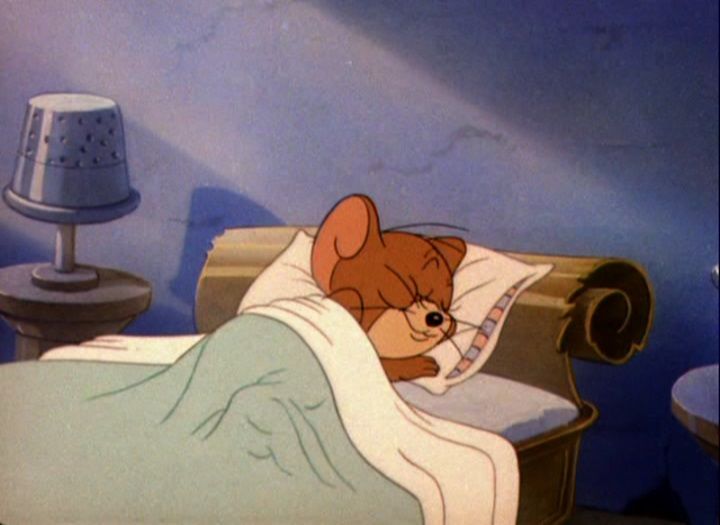
how you’ll sleep after getting rid of things that don’t spark you joy
TheCasper Strategy: Ghost them on chat but watch their stories obsessively. Don’t forget to like the stories where they’re super cute or you think allude to you.
How/why it works: Ghosting someone traps them in self-doubt preoccupied with what they did wrong, even though the problem stems from your inability to communicate like an adult. Kick them while they’re down by liking their stories on Instagram regularly, which bumps you to the top of the viewer list so they can’t ignore you even if they want to. It’s all power play, my friends, a perverse one once deconstructed.
(Effective for chronically online people who primarily rely on Instagram as a source of validation. But not effective for those who have a horde of fans to account to if they make questionable decisions.)
Counterstrategy: DON’T block them from watching your stories; no, enjoy the attention! DO block their stories from your feed, so you live in their mind collecting rent while you pay none. Then, go on to live your best life, whether you post about it online or not. Remember that YOU are the bourgeois and THEY are the proletariat.
this could be us but u ghosted me.
The ReincarnationStrategy: Reappear in their life by DMing them out of nowhere after a prolonged period of presumed death.
This strategy has two variations, each inversely proportional to the confidence or sympathy you wish to leverage. (Neither matters.)
Confidence route: provide no accompanying reason at all: simply audaciously announce that you desire to see them again.
Sympathy route: supplement the request with an explanation that you have been through some trööma that regrettably caused you to be unable to, again, communicate beyond the level of a three-year-old.
Pick the first variant if you’re insecure and the second if you’re manipulative. This strategy creates a virtuous loop with the ghosting one. You meet, die, reincarnate, and then die again! It’s an absolutely infallible combo. I recommend it 10/10 for clowns.
How/why it works: It throws the recipient off-guard by making them wonder if you have been thinking of them all this while. If they’re so over their head that they forget that you could have contacted them any time in between but chose not to until it was convenient for you (because they are ultimately a substitute), it could seem kind of romantic. In a world where we convince ourselves we don’t owe each other anything, it’s easy to confuse any casual act for affection. Lover beware!
Counterstrategy: Laugh in their face and move on. If you give in, oh well — we all have to binge on fast food occasionally because what is life without sin and a little indiscretion, even if you get a stomachache later. Just don’t make it a habit.
this photo isn’t even thematically related anymore. it’s just funny
The Promising Strategy: Make promises you have zero intentions of following through with.
Why/how it works: Empty promises lead to expectations, and the most powerful longing always concerns things that could have happened but never did. It’s inverted regret — a nostalgia for something that could’ve been, which could have been anything.
Counterstrategy: This one involves a radical change in your philosophy but will transform your life so drastically you’ll never look back. Hold on tight.
There are NO exceptions to this. NONE. Intentions mean absolute jackshit until they are realised. Whatever form they take on before realisation does not matter. It might as well not exist. It never existed. (TIL I’m materialistic without the -ic.)
If they believed you were worth it (immaterial), they would show you (material). If they claim to miss you (immaterial), they will meet you (material).
We can go further. A text telling you they miss you means nothing if they do not schedule a date to see you again. A kiss means nothing if the relationship is never defined (a “situationship”) and you are not cuffed — made “material” through accountability to others or bound by a physical contract.
We can argue that a text and a kiss are material since they occur in reality. But that is irrelevant because it is overshadowed by the immaterial intention behind the action that we project onto those we so desperately wish would love us.
The intention means nothing, even if they imply it, especially if you infer it.
Realise that we can never accurately capture the meaning of the present moment — the full picture only emerges in hindsight when the future has happened so that we can contextualise the past with it. You can immerse yourself in the now and feel it all, but that still doesn’t imbue it with any meaning outside your feelings. For an intention to be real, it must be manifested.
The past, present, and future cannot be considered separately in determining what is real and meaningful. Hell, even if it was real, it might not have meant anything. Maybe this is the logic that my pragmatic fans follow — did you really love them if you were never serious about them?
Naturally, you could argue that an intention could be real and meaningful, just that the person seems to be acting differently because you are mistaken about their intention. For example, if you’re only interested in sex, you only do booty calls. That’s perfectly congruent and reasonable if both parties are on board.
But the whole reason games exist is that people struggle to be upfront with what they want — worse if they do not know what they actually want. Then, everyone is in for a ride, and all intentions can go to die.
We can only establish if someone is sincere about you through the two elements of continuity and consistency. In other words, action and commitment, over and over, like the sea waves crashing into the shore for eternity, until death do us part.
—you will find someone who will love you, who sees you as a person, who is attracted to you; who will choose you, and continuously choose you.
my bestie (if everyone had a love like this there would be no divorces)
In short, words are just words (suddenly, I realise what my love language is not). You telling me I’m your favourite or that you respect me means nothing. I don’t care. You either prove it, or none of it matters — saying it is just performativity. You don’t have to say anything; I already know.
Intentions alone mean nothing. Promises mean nothing.
Perhaps even this blog post has meant nothing. But I hope it is at least marginally useful for my fans in helping them sieve out people who deserve them and people who don’t. God willing, considering how much time I’ve wasted on playing games, I might as well help people save some of theirs.
Know your worth, and the rest will follow. Whatever you give, you will receive in turn, good and bad.
– x, baby g, who loves you always (and has hopefully demonstrated it)
Bonus:
we accept the love we think we deserve.
my other bestie (quoting the Perks of Being a Wallflower)
my friends often tell me that i attract a “problematic” type of man but maybe that is because that is exactly what i want.
(highlight at own risk) can a decent conservative man really look straight at me with a hunter’s eyes, choke me, and then call me his good girl? in the end, he has to be a bit crazy, just like me.
and even if he does not want me — how will he ever settle for vanilla?
you told me you met the greatest love of your life, yet your voice cracked ever so slightly, and your smile was a little twisted.
you didn’t have to tell me; i know it was merely a matter of time. i hope you hold onto her tight and give her all the love she deserves, and her to you.
why were we standing facing each other again?
of all things, i remember the embrace of your arms in the quiet dark — it’s not been the same since. my cheek nestled in the nook of your neck, the steady whisper of your breath on my forehead. you would always fall asleep first — softly, calmly, the rise and fall of your chest signalling the transition to an altered state of consciousness.
one, two, three, four.
i would catch up to you later, lingering in that liminal space where nothing else mattered; it was just you and me. even when we had to wake up eventually, even when you would unconsciously turn your back to me in time.
i love you, i love you.
indeed, in an altered state, you will always be mine.
Humans commit to one another based on considerations of potential. They assess a prospect’s suitability and commit if they decide the arrangement is satisfactory.
Assortative mating comes into play here.
You date people you think are “in your league”, or if you’re lucky, you think are out of your league. Despite this, objectively speaking, if they like you back in the long run, they’re in your league (because they feel the same way about you — they think you’re good enough for them). So don’t be insecure about yourself, okay, babygirl? And watch out for lovers who regularly put you down — it’s not you, it’s them.
Ever heard of the ELO score on Tinder? That’s what’s operating here, except that Tinder is the World Wide Web (Offline).
Your ELO score comprises different dimensions: physical attractiveness/sex appeal, intelligence, wealth, health, humour, “personality”, etc. People differ in their preferences on those dimensions, although universal trends exist. Example:
but note many people don’t know what they really want, or lie to themselves. You and me included.
Naturally, idiosyncratic preferences exist. For example, I like simps. (Wait — who doesn’t?) Random disclosure from me because I love to overshare, and I want to remind everyone to know your worth: I permanently disqualified someone recently because he acted like he had no time for me. Huge landmine he stepped on. Well, so be it. You can play games with me… if you’re ready to lose. (Like, I said I would be okay if my partner had little time for me, but you can read my blog but not text me? Then you can stay a blog reader, thank yew.)
The preferences are gendered. Universal example: men prioritise physically attractive women; women prioritise high-status men. So, you are more likely to see a rich older man with a hot younger lady than the opposite.
The preferences are culturally influenced. Anecdotal example: sexual prowess does not rank highly for a lot of people in Singapore versus some other Western nation where hookup culture is more prevalent (I don’t even need to be specific; that’s how little sex we have. I must go.)
A relationship between two people who differ significantly on one dimension can still work out if that dimension is less important to the party who is higher on it. Hence, the “ugly funny guy gets the boring pretty girl” because looks > humour for him, humour > looks for her. You get the idea. On average, their ELO scores even out.
Lay theory prediction: the longer a relationship lasts, the more objectively similar the couple’s ELO scores are. A relationship with partners with discrepant scores is less likely to last, and the one with the higher score (delusional or not) tends to withdraw first. But even the delusional one will eventually be knocked back to reality through trial and error feedback — the only constant in life is the law of large numbers.
The best way to get an idea of your ELO score is to look at your long-term partner (or the kind of people you attract). If it still doesn’t add up… one of you has a self-esteem issue.
People commit based on potential. They stay committed for different reasons.
The investment model of relationships (Rusbult, 1980) predicts that commitment is determined by three factors. The more satisfied you are with the relationship and the more invested in it, the more likely you are to stay committed. The better you perceive your potential alternatives (other people in “your league”), the less likely you are to stay committed.
Some relevant concepts:
Sunk cost fallacy. An economist’s favourite. You’re unhappy in a relationship — but because you’ve invested so much into it, you might as well stay. Consider prospective and opportunity costs instead, which is what you lose by staying. Then again, I still can’t let go of my Sea Ltd stocks. So don’t let me tell you what to do.
People who claim they’re “dating down” are lying (and to themselves, too, if they lack self-awareness). You’re staying because you think you couldn’t get a superior alternative if you tried. If you genuinely believed you were dating down, your staying is irrational, meaning there is more to unpack there. Note that these evaluations are inherently subjective — just because you think you’re dating up or down doesn’t mean others will agree.
The lesson here (for me) is that if you want to assess your compatibility with your partner, don’t ask yourself. Ask your friends. Ask your parents. They might be biased, but they’re less biased than you.
The higher your ELO score, the better your quality of alternatives. That’s why hot guys can afford to play around. I’m just waiting for it to be acceptable for hot girls (joking — I don’t care).
Personal exposition (love and naïveté)
Men in Singapore are looking for stability. At least, an overwhelming number of men I’ve met are like this (same for women, where there is even less variation). My observation is definitely age-contingent, though. Guys are looking for girlfriends at 20 but wives at 30.
I was baffled for years about the preoccupation with stability, but I might be starting to see the light. Love’s great in itself, of course, but it is not enough in the great Pragmatic Nation of Singapore. People want love to lead to concrete outcomes, such as marriage, a BTO, and, most importantly, in the grand scheme of things (driven by a force beyond our control), children: the continuation of our species.
And why not, indeed?
Objectively speaking, the above are not inevitable outcomes of love. A counterpoint, however: maybe love — romantic love in particular — evolved to perfection precisely as an instrument to ensure these outcomes happen, over and over again, across humanity, and beyond time. That is, love was designed to lead to stability. Rather than being choices, as I hypothesised in post #1, they are merely two points on the same line headed in one direction. You either realise that love is to settle or stay naïve.
So, love is not enough.
Maybe I am naïve. I don’t really care. I’ll panic when I’m 30, I guess. Even if singlehood and living in a henhouse with my girls is my destiny, it’s not as if I’ll be loved any less. Put that on the record: it is what it is. Do what’s good for you.



 baby g’s diary